Aesthetic Fillings
In its historical process, dentistry has evolved from being a surgical branch aimed only at relieving pain into a discipline centered on aesthetic expectations and tissue-preserving approaches. In the past, while durability was the only priority in materials used for treating dental caries, today, mimicking the natural tooth appearance alongside durability has become a necessity.
The most concrete example of this change is restorations known colloquially as “white fillings” or “composite fillings.” These applications, termed Aesthetic Fillings in medical terminology, are tooth-colored polymer-based materials used both to correct deformities in anterior teeth and to repair substance losses in posterior teeth. Clinics providing oral and dental health services in Kırklareli and its surroundings closely follow these material technologies to respond to patients’ increasing aesthetic demands.
Structure and Scientific Basis of Aesthetic Filling Materials
While traditional amalgam (metal) fillings consist of a mixture of silver, tin, copper, and mercury, materials used in aesthetic restorations have an advanced chemistry called “composite resin.” Composites are composed of inorganic filler particles (silica, quartz, zirconium, etc.) embedded in an organic resin matrix.
With the development of technology, the dimensions of these filler particles have been reduced to the nanometer level. Thanks to “Nano-hybrid” or “Nano-filled” composites, Aesthetic Fillings can now refract, reflect, and be polished like natural tooth enamel. The most important feature of these materials is their ability to bond chemically to the tooth tissue. While metal fillings are mechanically packed into the tooth, composites adhere to the tooth with adhesive systems. This eliminates the need to cut sound tooth tissue for the filling to hold and fully complies with the principles of “Minimally Invasive Dentistry” (preventive dentistry).
For patients searching for a Kırklareli Dental Clinic, biocompatibility is also an important criterion in material selection. Composite materials do not contain mercury and work extremely compatibly with gum tissue when applied correctly.
Application Areas and Indications
In clinical practice, Aesthetic Fillings have a very wide range of uses. It is a method frequently resorted to not only in caries treatment but also in cosmetic adjustments:
- Caries Treatment: Filling the cavity formed after cleaning initial or advanced caries with tooth-colored material.
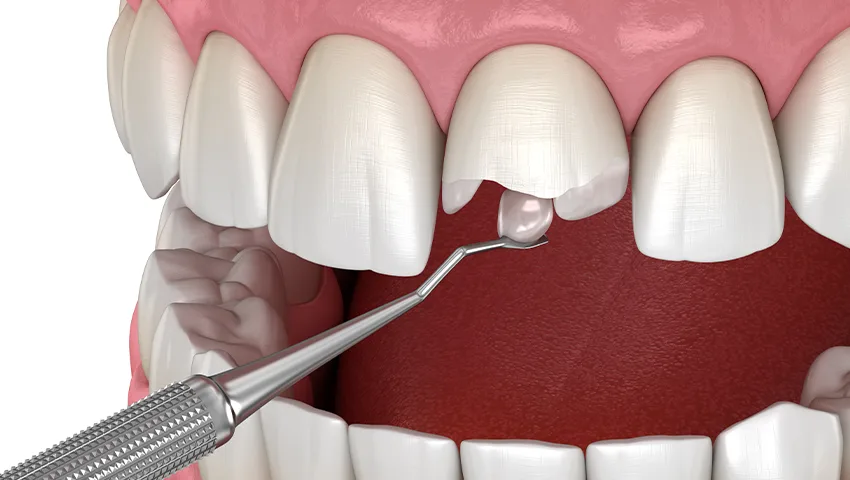
- Broken Tooth Restoration: Repairing front teeth (incisors) broken as a result of trauma in their own form without the need for any veneer.
- Diastema Closure: Closing unwanted spaces between teeth (gapped teeth) by adding filling material without cutting the tooth.
- Color Change: Masking stubborn discolorations or stains that cannot be removed by whitening.
- Amalgam Filling Replacement: Removing old, gray-black metal fillings and replacing them with tooth-colored Aesthetic Fillings.
- Tooth Lengthening: Regulating the smile line by lengthening teeth that are worn or genetically short.
Anterior Zone Aesthetics: Bonding Applications
“Bonding” or “Composite Laminate” applications, a special sub-branch of aesthetic filling procedures, are the most conservative (protective) method of smile design. In this procedure, usually, no substance is removed from the tooth surface, or only microscopic roughening is performed. In this approach, which is also included in Atlas Sea Dental clinical protocols, the physician gives a new form to the tooth by processing the composite material layer by layer on the tooth.
Bonding procedures, which are more economical than porcelain laminates and are usually completed in a single session, fall into the Aesthetic Fillings class, but the physician’s manual dexterity and artistic vision are the determining factors in this application. Not only the color of the tooth but also its translucency, surface texture, and light transmission must be mimicked.
Durability and Aesthetics in Posterior Teeth
For many years, it was thought that only metal fillings could withstand chewing forces in posterior molars. However, today’s reinforced composites can show resistance to high pressure and abrasion as much as metal fillings, and in some cases even more. Aesthetic Fillings used in posterior region restorations are processed in accordance with the cusp slopes on the chewing surface. In this way, the contact of teeth with each other during functional jaw movements is idealized.
In posterior teeth with large substance losses, porcelain or composite fillings prepared in the laboratory (Inlay/Onlay) may be preferred instead of direct fillings made in the mouth. In health institutions providing Kırklareli Dental Clinic services, physicians decide whether a direct filling or an inlay restoration is required according to the size of the substance loss.
How Does the Treatment Procedure Work?
Aesthetic filling application is a phased process requiring technical precision. Moisture control (isolation) is essential for a successful result.
- Anesthesia and Cleaning: First, the relevant area is numbed with local anesthesia. Caries tissue or old filling residues are completely cleaned.
- Color Selection: Before starting the procedure, the tooth color is determined using a color scale under natural light without drying the teeth.
- Isolation: The environment must be dry for the filling to adhere to the tooth. The tooth is isolated from saliva using cotton rolls or a “rubber dam.”
- Acid and Bonding: Phosphoric acid is applied to open microscopic pores on the tooth surface, washed, and dried. Then, an adhesive agent called “bond” is applied and cured with light.
- Layering: Aesthetic Fillings in the selected color are placed into the cavity in layers. Each layer is cured separately with a polymerization device (blue light). This method is critical to prevent shrinkage of the filling.
- Shaping and Polishing: When the filling process is finished, height control is performed. Excesses are removed, and the filling is polished using special discs and rubbers. This stage is very important to prevent plaque retention and ensure natural shine.
Advantages of Aesthetic Fillings
The main reasons why patients and physicians prefer Aesthetic Fillings are:
- Aesthetic Superiority: Offers color and form options indistinguishable from natural teeth.
- Tissue Preservation: There is no need to cut sound tooth tissue as it does not require mechanical retention.
- Support: Since it chemically bonds to the tooth, it supports weakened tooth walls and increases resistance to fracture.
- Repairability: When there is a small fracture or wear in the filling, it can be repaired without removing the entire filling.
- Single Session Solution: Since it does not require a laboratory stage (in direct applications), the treatment is completed within the same day.
Clinics like Atlas Sea Dental emphasize the importance of regular check-ups while offering these advantages to their patients.
Lifespan and Durability: How Long Is It Used?
No restoration material is as permanent and durable as natural tooth tissue. However, Aesthetic Fillings performed with correct indication and meticulous workmanship can remain in the mouth for an average of 7 to 10 years, or even much longer with good care. Factors affecting the life of the filling are:
- Oral Hygiene: Regular brushing and flossing.
- Eating Habits: Consumption of very hard foods or acidic drinks.
- Parafunctional Habits: Teeth clenching or grinding (bruxism) can cause fillings to break or wear.
- Size of the Filling: The durability of fillings with very large surfaces may be less than smaller fillings.
Do Amalgam Fillings Need to be Replaced?
One of the most frequently asked questions by patients is whether they should replace their existing black fillings with Aesthetic Fillings. The medical approach is usually this: If the existing amalgam filling is intact, there is no leakage at the edges, and there is no decay underneath, replacing it solely for aesthetic concerns (due to the risk of mercury vapor release) may not always be the first option. However, if the filling is deteriorated, aesthetic expectation is very high, or there is a suspicion of metal allergy, replacement can be done by taking necessary safety precautions. Kırklareli Dental Clinic physicians evaluate the patient’s general health status and radiological findings when making this decision.
Sensitivity and Possible Complications
After the filling procedure, cold-hot sensitivity (post-operative sensitivity) lasting 1-2 weeks can be seen, especially in deep caries. This situation is usually temporary and is part of the tooth’s healing process. However, if the sensitivity gradually increases or turns into night pain, root canal treatment may be required. The quality of “bonding” agents used while applying Aesthetic Fillings and the application technique are the most important factors minimizing the risk of sensitivity.
Pricing and Cost Policies
The cost of Aesthetic Fillings varies according to the location of the tooth to be filled, how many surfaces the filling has (its size), and the quality of the material used. Each clinic creates its own price policy based on the minimum wage tariff determined by the Turkish Dental Association. Since anterior zone aesthetic restorations (bonding) require more time and labor than standard fillings, their costs may differ.
Healthy and Confident Smiles
Thanks to developing dental technologies, repairing teeth damaged by caries or trauma no longer requires compromising on aesthetics. Aesthetic Fillings are an indispensable part of modern dentistry with their biological compatibility, tissue-friendly properties, and visual advantages. Individuals living in the Kırklareli region can protect their oral health and bring their smile aesthetics to an ideal form by applying to institutions with Kırklareli Dental Clinic status.