Oral and Maxillofacial Surgery
Oral and dental health is a complex biological system that extends from bone tissue to soft tissues, from joint structure to nerve networks, and is not limited to the aesthetics of visible teeth or the cleaning of cavities. Oral and Maxillofacial Surgery is the main branch of science undertaking the diagnosis and treatment of pathological conditions (diseases), developmental disorders, or traumas occurring in this system. This discipline, which is one of the most comprehensive and technically sensitive areas of dentistry, includes many procedures ranging from the extraction of impacted teeth to cyst operations, implant surgery, and jaw joint disorders. Serving in the Thrace region, Kırklareli Dental Clinic Atlas Sea Dental carries out treatments within this scope using scientific methods by fully complying with the sterilization chain and surgical protocols.
What is Oral and Maxillofacial Surgery?
Medically defined, Oral and Maxillofacial Surgery is a specialty dealing with diseases, injuries, and deformities of all soft tissues (cheek, palate, tongue, lip) and hard tissues (teeth, bones) within the oral cavity. Procedures performed in this field cover a wide range extending from simple tooth extractions to advanced jaw surgeries performed under general anesthesia.
Surgical procedures in the clinical setting are generally performed under local anesthesia, in comfortable conditions where the patient is conscious but feels no pain. In well-equipped clinics like Atlas Sea Dental, risk analysis is provided by performing radiological examinations (Panoramic x-ray or Tomography) before surgical procedures, minimizing the possibility of complications.
Impacted Tooth Operations (Wisdom Teeth)
Impacted tooth extractions are among the most frequently applied procedures in Oral and Maxillofacial Surgery clinics. Especially third molars, known as “wisdom teeth,” cannot erupt fully when they cannot find enough space in the dental arch and remain impacted or semi-impacted.
Why should these teeth be extracted?
- Pericoronitis (Gum Inflammation): Food residues filling the gum pocket around the semi-impacted tooth can cause infection, pain, and limitation in opening the mouth (trismus).
- Crowding: The tooth trying to erupt pushes the teeth in front of it, leading to orthodontic deterioration.
- Cyst Formation: The follicle sac around the impacted tooth can turn into cystic structures over time and melt the jawbone.
- Caries: Since it is difficult to clean, it can cause decay in the neighboring tooth (2nd molar).
In such cases, surgical extraction is indicated. Kırklareli Dental Clinic Atlas Sea Dental physicians plan the extraction according to the position of the tooth and its proximity to the nerve canal, removing the tooth with atraumatic methods.
Dental Implant Surgery
Implant applications, which are the gold standard in the treatment of tooth deficiencies today, are basically an Oral and Maxillofacial Surgery procedure. The process of placing an artificial root (titanium screw) into the jawbone requires sterile surgical conditions. The success of the implant depends on the accuracy of the surgical technique and the quality of the bone.
Implant surgery is not limited to just placing the screw. In cases where bone volume is insufficient, “Advanced Implant Surgery” techniques come into play:
- Sinus Lifting: Lifting the floor of the sagging sinus cavity in the posterior upper jaw and adding bone powder.
- Bone Augmentation (Grafting): Providing new bone formation by applying bone powder and membranes to areas with bone resorption.
Split Osteotomy: The process of expanding thin bones.
All of these procedures require the discipline of Oral and Maxillofacial Surgery and biological knowledge.
Cyst and Tumor Operations
Pathological cavities filled with fluid, called cysts, can form around jawbones and tooth roots due to developmental reasons or infection. These cysts usually progress insidiously and grow without causing pain, leading to massive destruction in the jawbone. The treatment of these lesions, which are noticed in routine radiological checks, is surgical removal (enucleation).
The aim of cyst operations is not only to remove the cyst but also to prevent its recurrence and ensure that the resulting cavity is filled with new bone. In cyst operations performed within Kırklareli Dental Clinic Atlas Sea Dental, the removed tissues are sent for pathological examination when deemed necessary to make a definitive diagnosis.
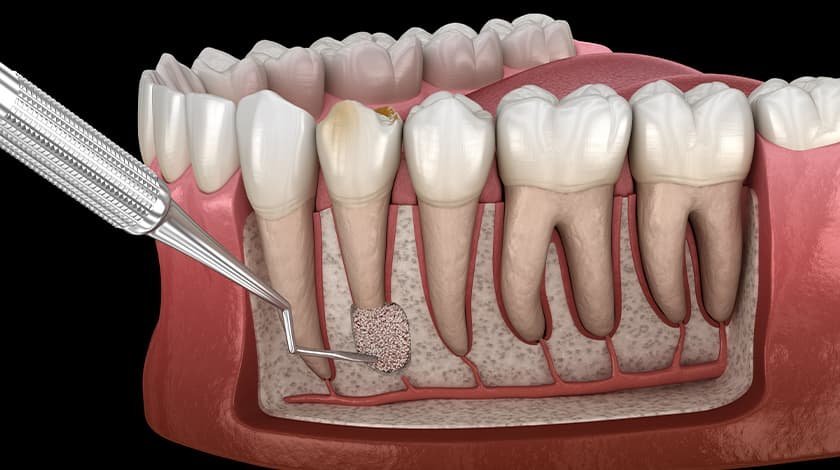
Apical Resection (Root Tip Surgery)
It is an Oral and Maxillofacial Surgery method applied in cases where the infection at the root tip does not heal despite root canal treatment, cyst formation has started, or the canal cannot be filled up to the root tip due to calcification.
In this procedure, without the need to extract the tooth, the gum is opened, and the root tip is reached directly through the bone. The infected tissue and the tip of the root are cut and removed, then the root tip is sealed with special filling materials. In this way, the tooth is kept in the mouth. It is an extremely valuable procedure in terms of preventive dentistry.
Temporomandibular Joint (TMJ) Disorders and Treatments
The Temporomandibular Joint (TMJ) is a complex structure that connects the lower jaw to the skull and enables speech and chewing functions. Problems may occur in this joint due to teeth grinding (bruxism), stress, trauma, or occlusion disorders.
Symptoms include:
- “Clicking” sound when opening and closing the mouth.
- Jaw locking.
- Pain in front of the ear.
- Tenderness in chewing muscles.
Oral and Maxillofacial Surgery specialists primarily try non-surgical methods (night guard, medication, physical therapy) in the treatment of these disorders. However, minimally invasive surgical procedures such as “Arthrocentesis” (joint washing) or intra-articular injections can be applied in advanced cases. Atlas Sea Dental physicians focus primarily on preventive methods to protect joint health.
Pre-Prosthetic Surgery
It is the process of making the hard and soft tissues in the mouth suitable for the prosthesis in patients who will receive removable dentures or fixed prostheses.
- Alveoloplasty: Correction of sharp protrusions occurring in the bone after tooth extraction.
- Torus Removal: Removal of bone growths on the palate or tongue side.
- Frenectomy: Releasing the frenulum (ligament) in cases where the tongue or lip tie is too short or attached, to correct speech or prevent gum recession.
These procedures are applied within the scope of Oral and Maxillofacial Surgery to increase the success of the prosthesis and patient comfort.

Technology and Imaging in Surgical Procedures
A successful surgery begins with detailed planning. Traditional 2D x-rays may be insufficient to show bone thickness or the exact location of nerves. Therefore, the use of 3D Dental Volumetric Tomography (CBCT) has become widespread in modern Oral and Maxillofacial Surgery applications. Thanks to tomography:
- The relationship of the impacted tooth with the nerve,
- The millimeter thickness of the bone where the implant will be placed,
- The borders of cysts,
The structure of sinus cavities are clearly displayed.
Kırklareli Dental Clinic Atlas Sea Dental uses digital imaging technologies to minimize surgical risks and shorten the operation time.
Post-Operative Healing Process and Care
The healing process after surgical procedures depends on the general health of the patient and compliance with the physician’s recommendations. Things to consider after the procedure:
- Tampon Application: The tampon placed to stop bleeding should be bitten for 30-45 minutes.
- Cold Compress: Applying ice externally for the first 24 hours reduces swelling (edema) and bruising.
- Nutrition: Hot, granular, and acidic foods should be avoided on the first day; warm and soft foods should be consumed.
- Smoking: Smoking disrupts the clot at the wound site and can cause a painful condition called “Alveolitis” (dry socket). It should strictly not be smoked during the healing process (first 48-72 hours).
- Oral Hygiene: Rinsing should not be done on the first day; the mouth should be cleaned with mouthwashes recommended by the physician or salt water the next day.
Importance of Sterilization in Oral and Maxillofacial Surgery
Surgical procedures are procedures open to the risk of infection. Therefore, sterilization of the clinical environment is vital. Sterilization of used instruments in an autoclave, preference for disposable materials (gowns, drapes, aspirator tips), and environmental disinfection must comply with standards. Kırklareli Dental Clinic Atlas Sea Dental meticulously applies international sterilization protocols to offer a safe treatment environment to its patients.
Representing the curative power of dentistry, Oral and Maxillofacial Surgery is a fundamental discipline that relieves patients’ pain, restores lost functions (chewing, speaking), and eliminates pathologies. Every procedure, from the extraction of an impacted tooth to the reconstruction of the jawbone, requires biological knowledge and surgical experience.
Fear of surgery has been replaced by a comfortable treatment process thanks to today’s anesthesia techniques and minimally invasive approaches. What matters is addressing the problem without delay with correct diagnosis and planning by specialist physicians. As a regional health service provider, Atlas Sea Dental follows current developments in the field of Oral and Maxillofacial Surgery and aims to offer the most correct treatment to its patients. A healthy mouth structure is the gateway to general body health; do not postpone your surgical needs, trust professional hands.